I’ve worked on a lot of little and some large projects this past week. Frolic is still not up to date. The reveal has been made and I can see where the pieces go. I will keep sewing on this project for a few minutes each day until it is finished.

In the meantime, I have corrected the 8th commandment
 and pieced the 9th commandment. One more commandment block to sew and then the instructions to put all the blocks together should arrive. One block a week is so much easier to finish than the multiple blocks in the Frolic mystery quilt. There will be enough lavender fabric left to make a lot of accents for the bedroom.
I was able to place a small quilt on the Grace frame this week. Leah Day has excellent You tube videos that tell how to do this. I’ve learned a lot, but there is so much more to learn. The quilt is half quilted. I find that trying to learn new things is not as easy as it seems. It is sometimes very frustrating. I am learning how to prevent my mistakes when I quilt the next quilt. I know that I have to practice a lot, but I do get impatient when it doesn’t look as good as I would like it to be. In the meantime, Miss Molly will get a new quilt. Maybe, more than one. My work should improve with practice.
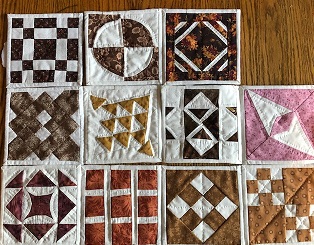
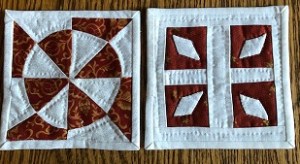
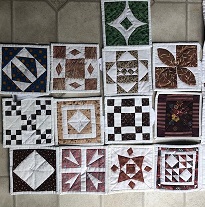
Several more Dear Jane blocks are finished. I try to have enough finished blocks on hand to quilt or tack the binding when I go to a sit and sew. This project will keep me busy for a long time. The next block to make has three circles appliqued on it. My circles usually come out crooked. I have thought of a way to make a perfect circle. If it works, I’ll tell about it in a future post.
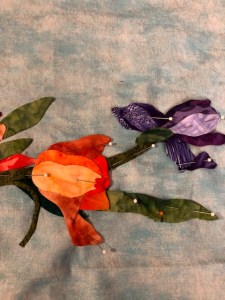
 I decided to finish the bird thread painting. It will be ready to go to it’s new home as soon as I make a label. I have another bird thread painting started in my stash of bits and pieces. I may finish that one in the future and keep it. The other bird blocks that I brought out to choose from are back in the stash of bits and pieces.
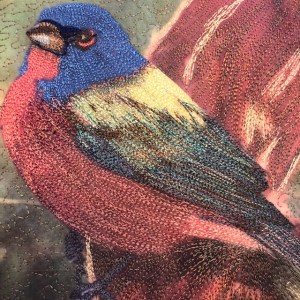
The bird block was made by color copying the picture of the bird onto fabric. Then I lightly thread painted over the picture. It’s very relaxing and like coloring inside the lines.
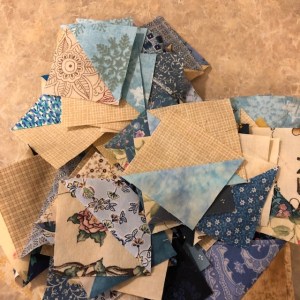
The tub of little fabric pieces is filling up. Someday soon, I’ll have to take time to cut the fabric into small squares so that I can sew some little blocks as beginners and enders.
There are no meetings or appointments for the next two days. Hopefully, I can concentrate on one of my projects and finish it.
Have a great day and happy quilting.
 Commandment #7
 When the bed runner is finished, I will quilt it on the Grace frame. A friend from the Guild and her husband came on Monday morning and finished setting it up. It’s all ready to go. I will put a quilt package on it this week and start to practice, practice and more practice. Hopefully, I can quickly finish a lot of my ufos.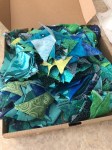

 This is all the little pieces that need to be sewn together to make a queen size quilt.
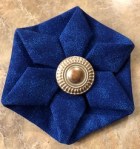 I made a folded fabric hexi. It was fun. The first one took an hour. The second one took ten minutes. They are really easy to make after the first one. There is a pin clasp on the back so it can be worn as a pin.
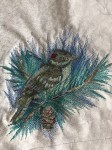 Today, I embroidered a bird that I bought from Embroidery Library. Their embroideries always sew out beautifully. It did, but I think that there isn’t enough color contrast between the bird and the foliage. I will save it for another project.
 These two blocks are hand embroidered. I think that my mother made them.


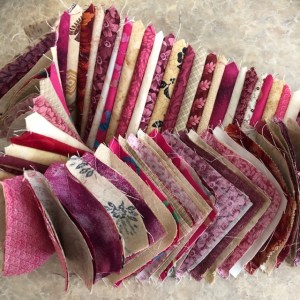 Part five is finished. It called for lots of half square triangles that are sewn the same as part three. The color is raspberry and neutrals. This time, I decided to make the half square triangles in the accordion method. They worked up quickly and are trimmed and ready for the next step.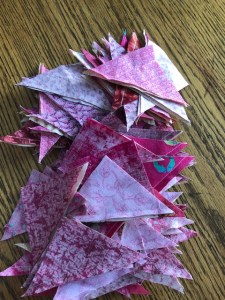
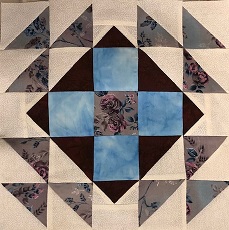
 The third clue in Frolic came last Friday. It allowed us to choose how we made half square triangles. At first, I thought that I would make mine with the accordion method. That would make each block with different fabrics. They have to be trimmed a little after sewing. Then, I thought that I would make mine oversize and trim them with the Tucker Trimmer. There would be two blocks with the same colors. I decided to use the Tucker Trimmer method. Two similar blocks would not be noticed in this quilt. The fourth clue will come tomorrow. This will be a beautiful quilt.
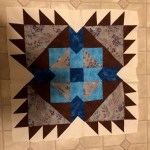
 The second and third commandments are on the right side of the bed runner. I have saved the teal fabric that I used in those blocks to use in the two blocks on the left side. I will find another teal fabric to use in the blocks that are closer to the center.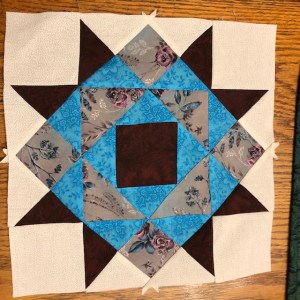

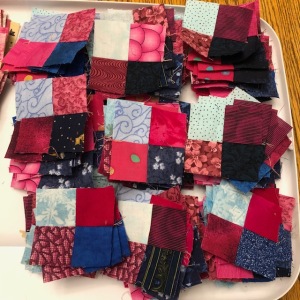 The first week used the two blues and raspberry. They made lovely blocks. Bonnie’s tips on perfect piecing made the blocks come out the perfect size. I followed her tip on how to sew and found every four patch came out perfect. I had made extra in case the centers weren’t perfect. I now have the beginnings of another quilt.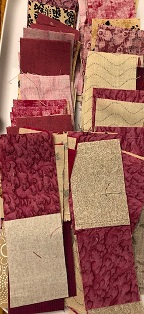
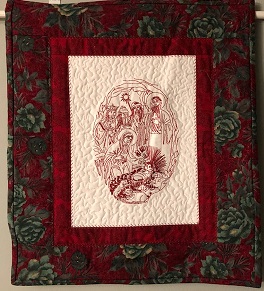
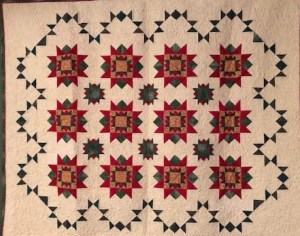
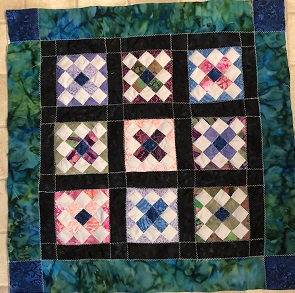
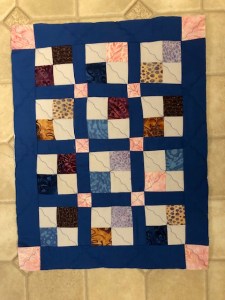 The best part of making small quilts is that they can be finished. One of her quilts is very small. The other uses leftover strips.



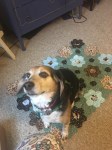
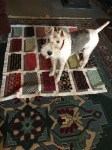
 After a hard day at work, they are taking a much needed rest. I can imagine that they are discussing their work and how much they enjoy it. Miss Molly was generous enough to let Rufus sleep on her quilt.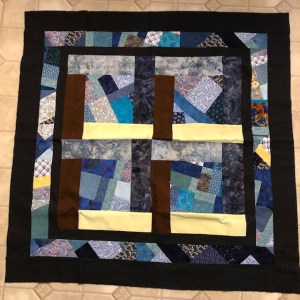

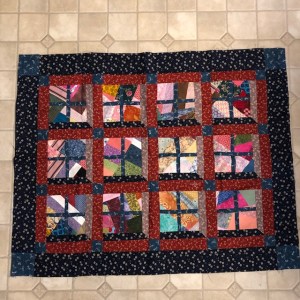 Did you know that if you insert one inch strips into a block, the block will be the same size when it is finished. I cut the Mile A Minute block in quarters and inserted strips. When placed in the Attic Window setting, it looks like windows.
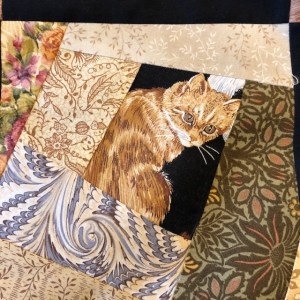
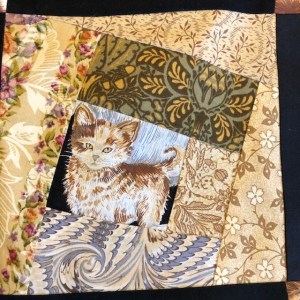
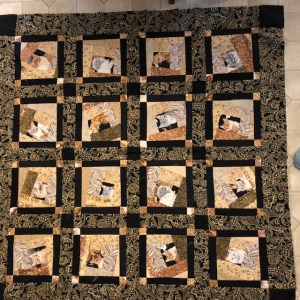 I was looking for some fabric when I found some cute kitten fabric. I was inspired to fussy cut the kittens and place them in the middle of the block. In three hours, I had enough blocks to make this cute baby quilt. The sashing and borders didn’t take long. It just needs quilting and some baby will have a pretty quilt.