
A friend asked me how I chose the fabrics for the Temperature quilt and I realized that I have mentioned it but never told how I made it. The Temperature quilt can be made is several ways. One of my daughters made a beautiful one in hexagons. I choose to make mine with a flying geese. For each flying geese you need two fabrics. One for the highest temperature of the day and one for the lowest temperature of the day. The geese is made with the highest temperature fabric and the sky with the lowest temperature fabric. As for choosing fabric, anything goes. I did choose several batique fabrics from my stash. They didn’t necessarily go with each other. You can choose a line, a colorway, or just large pieces that are in your stash, Thirties fabric would make a nice Temperature Quilt. You can go from light to dark. Whatever you want. To keep them in order, label baggies with temperatures in 5-degree increments. Below 0, 1 – 5, 6-10, 11 – 15, 16 – 20 etc. all the way up to over 100.
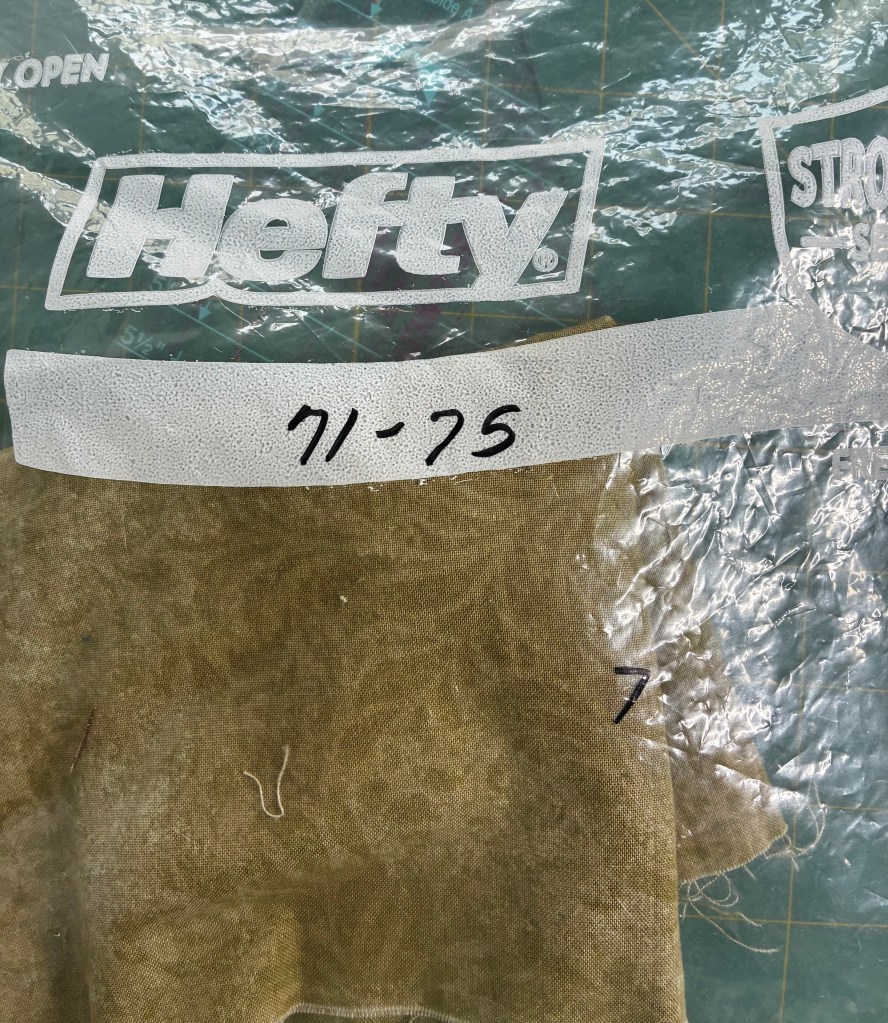
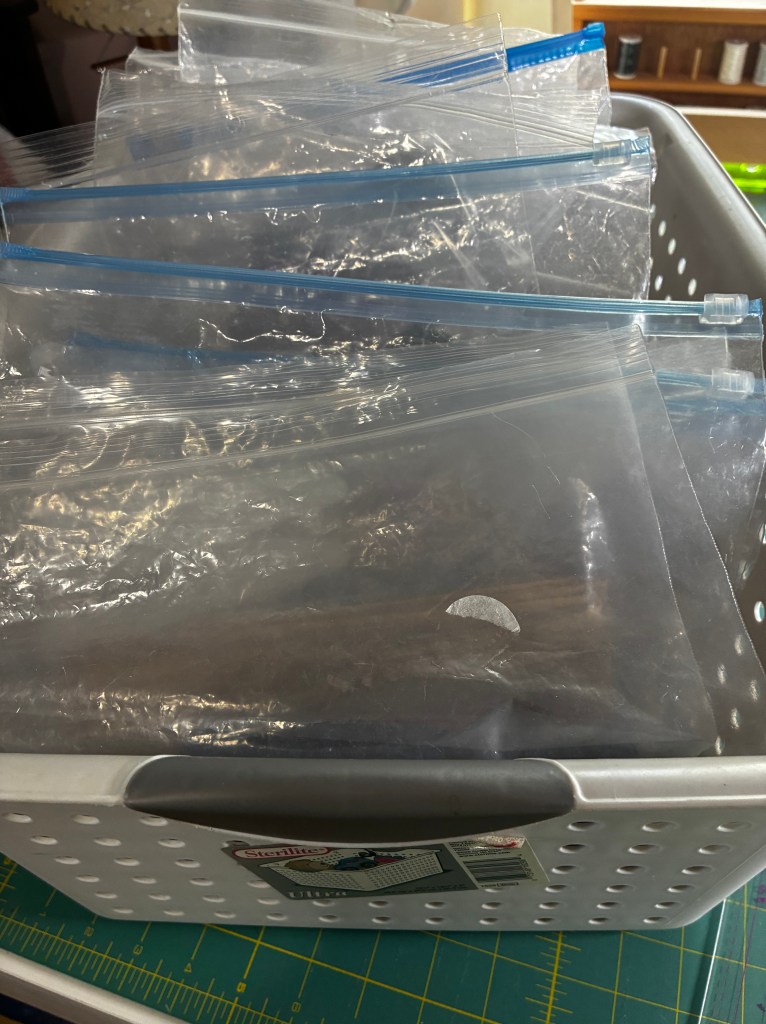
The baggies are kept in a bin in numerical order all year until the quilt is done. Also, in the bin is the ruler and the sashing material.
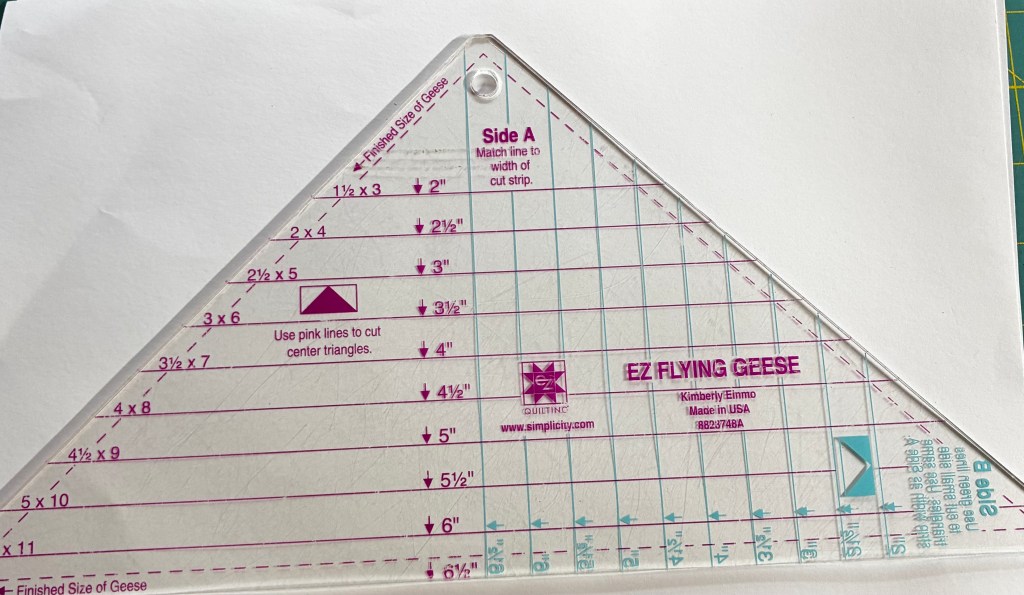
I use the Kimberly Einmo flying geese ruler. The fabric is cut in 2 1/2-inch strips and then sub-cut with this ruler. It makes just one flying geese at a time and there is no fabric waste. The red side A is for cutting the geese and the blue side B is for cutting the sky. For each day you will need one geese and two skies, cut with either right or back sides together.
The geese are lined up for each month. When there are less than 31 days in the month, a sashing strip replaces the geese.
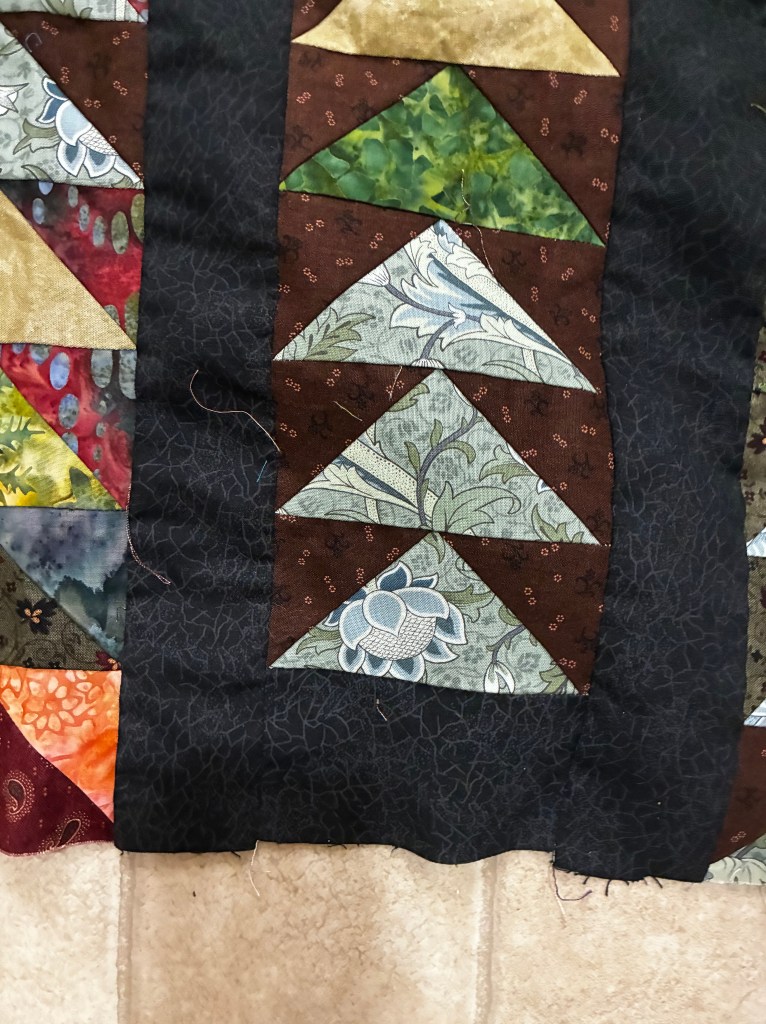
When making January temperatures, cut a strip from the fabric that you are using for sashing as long as the geese strip across the width of the fabric. That way all the sashing will be the same length. My sashing was 2 1/2 inches wide. The outside two strips will be larger as they will be a border, unless you want the border to be a different color.
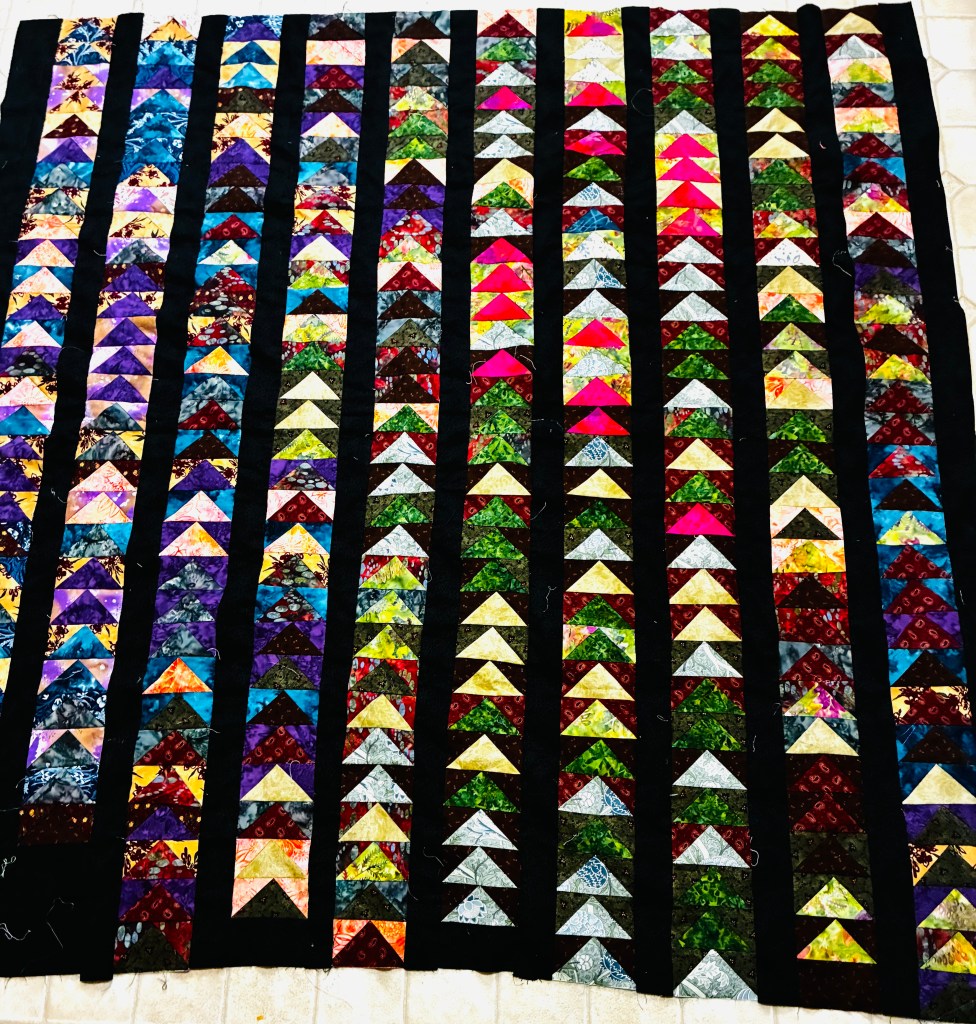
No matter what colors you use for your temperature quilt, they will be similar on both sides of the quilt. The temperatures go from cold to warm to hot, back to warm and then cold again. Cutting off the dog ears will help make the pieces line up easier. Press towards the sashing. Sew the sashing strip on as each flying geese strip is attached. When the next flying geese strip is attached the stitching will line up with the seam of the geese on the previous geese row. There are days when there isn’t time to make a block. I try to send an email to myself with the temperatures. When I forget to do that, there is a website with past temperatures for the city that I live in. It’s o.k. to make a week’s worth of blocks in one day. This is a stress-free quilt. Just one little block to make every day. At the end of the year a beautiful quilt is finished.
Have a great day and happy quilting.


