
 The long weekend is over. Fall has officially arrived. The weather is perfect. Warm and crisp, not muggy. On Friday, I went south a little bit to Hallowell, Maine for one of my daughter’s wedding. The wedding was held along a walking trail at Vaughn Woods.
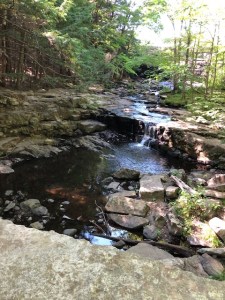 It is a perfect trail. Not hard to walk it at all. There were several people walking with their dogs on the trail. The scenery is beautiful. It is well worth the trip to walk the “Hobbit Trail” at Vaughn Woods in Hallowell.
After the wedding, we went to a steak house in Augusta and then on to Madison, N. H. On Saturday, we had a barbecue and then I went further south to my New Hampshire home. I had so many chores to do there. I didn’t have time to sew or quilt.
left N. H. at 5:15 A.M. for the four hour trip back to Maine. I have had enough driving for a while. Miss Molly spent five days at a kennel while I was away. She loves to go to a boarding kennel, so I feel good about leaving her there.
This morning, I was relaxing and checking Facebook and a screen came up. It said “Get off the Internet and go sew something”. O.K. So I did. Facebook is really bossy.
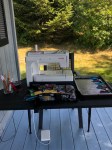 It was such a beautiful day. I didn’t want to be inside so I took my sewing machine outside on the porch. I have electrical outlets there. I had planned to do sew outside all this summer, but didn’t. It will be my new place to work on sunny days.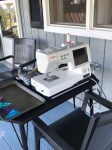
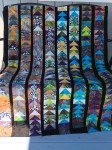 The black sashing fabric for the temperature quilt was in N. H. I brought it up to Maine. I finished June. It needed a black spot because June has only 30 days. Then, I added the sashing and the July and August strips. I’ve started on September. The colors on the right side of the quilt should start going back to the colors of the left side soon. It will be a pretty quilt.
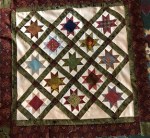
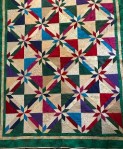 When I was in N. H., looking for a quilt, I found this Hunter Star quilt. It was made from blocks that I made when I demonstrated Deb Tucker’s Hunter Star ruler. It is such an easy quilt to make. Looking around, I found two more.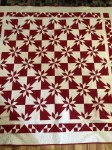
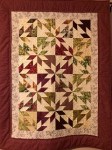
I have lots of quilting and sewing planned for the next few weeks.
Have a great day and happy quilting.
 I finished a UFO today. I hadn’t worked on one for a long time. This pineapple log cabin was made many years ago. It was paper pieced. It is small, only 12″ x 12″. Some of my UFOs are small and some are large. I have some papers with log cabins drawn on them that are just about this size so I could make some more. That is not in my plans for now.
 What a difference a day makes. I unsewed the parts to the star points on last week’s Moda Blockhead 2 block. I realized that I had omitted the step to trim the parts. After they were trimmed, they went together as they should. I did find the missing star point. It was under the sewing machine. All’s well that ends well.
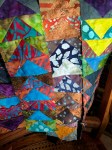
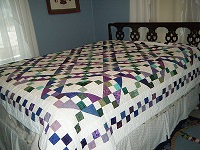 In past years, my daughter came to Maine several times for a week in the summer. We called it “Quilt Camp”. We quilted. We went to yard sales, flea markets and consignment stores. Whatever we wanted to do. We had a great time. One year we sun dyed fabric in the back yard. The fabric was beautiful. Ferns and other items were imprinted on the fabric. A few years after we sun dyed, I made a quilt with the fabric and gave it to her. It is a good memory of our special time together.
 Melissa is finished. It is a good feeling to finish a project. I have so many long term projects that never seem to be completed. Most are one block a week (Moda Blockhead 2 and Simple Sampler) or one flying geese a day ( the Temperature quilt). Then there is Dear Jane. She just plods along when I feel like working on her. I have several quilts that are basted and ready to quilt. Also, a few UFOs that I intended to finish this summer. I really should concentrate on one quilt and get it done.
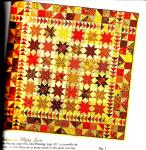 I haven’t talked about Miss Rosie for a while. Today’s quilt is called Open Door. Kerry Nelson, the author of the Miss Rosie book , made her quilt with red, brown and yellow fabric.
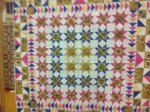 The center of my stars were cut from a fabric that I had bought for another project. The flower squares were the right size and there were enough of them to make the quilt. The flowers were different colors so I was able to put them in a medallion setting.
 My daughter’s quilt was made with red, blue and turquoise stars. All the fabric came from our stash, so we were able to make quilts with many colors.


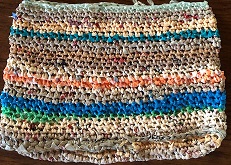
 Strips of plastic bags in balls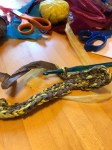
 Bags ready for linings.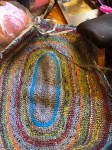
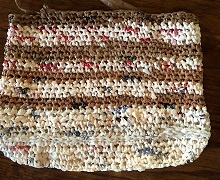
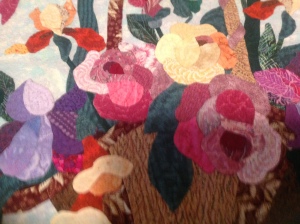
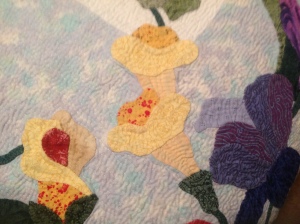
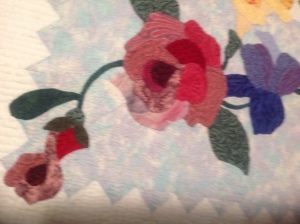
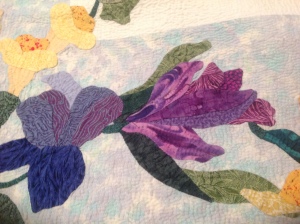
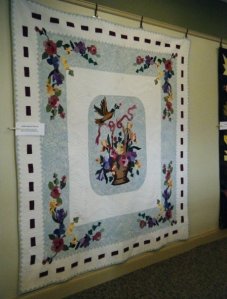 Basket and Butterflies is my favorite quilt. Many years ago, I took an applique class with Nancy Pearson at the Vermont Quilt Festival. I had taken classes with other applique instructors, but it wasn’t anything that excited me. The first half of the class was not about applique. It was about color and fabric choices. We cut and pasted fabrics onto paper. When we left class for lunch, several of the students were fussing and saying they didn’t sign up for that type of a class and were not going back. It was their loss as Nancy taught applique in the afternoon class. We had our background in color so the flowers were beautiful. Nancy taught us how to applique a twisted ribbon without having bulk at the joining. It was awesome and I was hooked on applique.
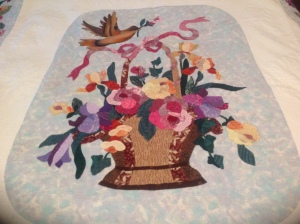 The center of Basket and Butterflies was the class project. I had enough wall hangings so decided to enlarge it and make a queen quilt. I designed a border using Nancy’s flowers and made a woven ribbon with the same colors as the ribbon on the basket.
 The quilt was named Basket and Butterflies because when I became bored with the stipple quilting, I quilted orange butterflies in the background, It is very subtle but makes a nice surprise when the viewer discovers the butterflies.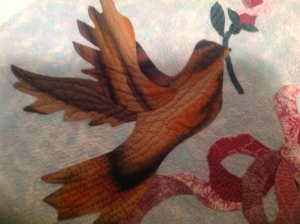


 I actually finished a UFO today This is a really old one. I think that I used the Lazy Girl flying geese ruler to make the flying geese. It makes four at a time. The piece is 20″ x 20″ and will go in the “give away” bin. It’s machine quilted so didn’t take long to finish. I used the leaf galore ruler to mark the curvy lines. The ruler was the exact length as the border so I didn’t have to add or subtract anything. I gave up on trying to finish a UFO every week. The small ones were easy to do, but the larger ones take more time. they’ve been sitting there for a while so they can sit a little longer.
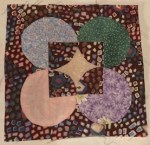 Last week’s Splendid Sampler block was designed by Rachael Daisy. It is called Around Four Corners. Quilters who write several of the blogs that I follow are doing the Splendid Sampler as well as the Moda Blockhead 2. They give tips about sewing the blocks. The tip for this block was to sew it exactly as the pattern says. That is reasonable. One of the reasons that I am making the Splendid Sampler blocks is to learn new techniques.
